The following are parts of Keenan's report from 1878:
"...the education of the children frequenting (going to) the Primary Schools must be based upon the principle (idea) of teaching how to read their native Maltese language as correctly as English children of the junior classes are taught how to read English in an English National School."
"...the Maltese Language...under skillful treatment may become an instrument (something to use) in itself of true education and at the same time a ready and natural means (an easy way) of bringing about a general knowledge and use of the English Language"
P.J. Keenan, "Report upon the Educational System of Malta" (London, 1880)
From the source which language do you think Keenan thinks is the most important?
How does he plan to increase that language's importance?
Who would not agree with this?
Thursday, 16 October 2014

Royal Commission of 1836 Source No. 1
Source A
"The Maltese language is a corrupt (changed) dialect of the Arabic, which has never been used for literary (writing) purposes, or even written in a uniform and stable manner. The Italian may be deemed (seen as) the literary, and even the written language of the island. From the end of the 15th Century, the records of the Consiglio Popolare were kept in Italian. The Italian, with the Latin, is the law language of the island; and accordingly; the laws made and promulgated (put into effect) under the Government of the Order are written in the former language. Every Maltese author who has not written in Latin has written in Italian. The accounts of the native merchants....are kept in the same language... in familiar conversation, people of education, as well as the working people , speak their native Arabic... it follows that the Italian language is far more useful to a Maltese than any other language, excepting his native tongue..."
G.Cornwall-Lewis and J. Austin, Reports of the Commissioners Appointed to Inquire into the Affairs of Malta (London, 1838)
Questions
"The Maltese language is a corrupt (changed) dialect of the Arabic, which has never been used for literary (writing) purposes, or even written in a uniform and stable manner. The Italian may be deemed (seen as) the literary, and even the written language of the island. From the end of the 15th Century, the records of the Consiglio Popolare were kept in Italian. The Italian, with the Latin, is the law language of the island; and accordingly; the laws made and promulgated (put into effect) under the Government of the Order are written in the former language. Every Maltese author who has not written in Latin has written in Italian. The accounts of the native merchants....are kept in the same language... in familiar conversation, people of education, as well as the working people , speak their native Arabic... it follows that the Italian language is far more useful to a Maltese than any other language, excepting his native tongue..."
G.Cornwall-Lewis and J. Austin, Reports of the Commissioners Appointed to Inquire into the Affairs of Malta (London, 1838)
Questions
|
From
the source find the 2 main languages used in Malta
|
Who
used the language?
|
Is this a Primary or Secondary source?
When was this source written?
Which language did the Commissioners mention was most important?
Friday, 3 October 2014
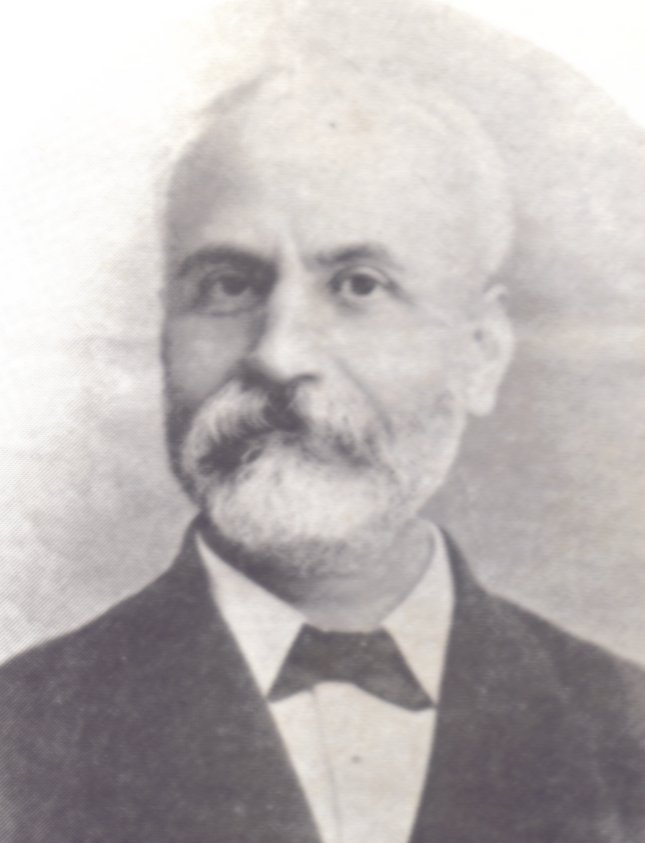
Monsignor Ignazio Panzavecchia and the Partito Popolare
Monsignor Ignazio Panzavecchia
Monsignor Ignazio Panzavecchia was chosen as the representative for the Church in the Government Council in 1891/2. Being a member of the clergy he was against Civil Marriages becoming legal in Malta and this would lead to the setting up of the Partito Popolare in 1895. He was a staunch supporter of the Latin culture in Malta and this was shown in his party which was against any British attempts of Anglicization of the island. Like the Anti-Riformisti he also wanted Malta to have its own Constitutional Rights.
Monsignor Ignazio Panzavecchia was chosen as the representative for the Church in the Government Council in 1891/2. Being a member of the clergy he was against Civil Marriages becoming legal in Malta and this would lead to the setting up of the Partito Popolare in 1895. He was a staunch supporter of the Latin culture in Malta and this was shown in his party which was against any British attempts of Anglicization of the island. Like the Anti-Riformisti he also wanted Malta to have its own Constitutional Rights.
 |
| Monsignor Ignazio Panzavecchia |
The Reform Party
The Reform Party is set up
The Reform Party was set up by Sigismondo Savona. Savona was one of those responsible for putting into practice the propositions made by the Royal Commissioners of 1878, one of which was to start teaching students English before Italian. Sigismondo Savona was made Director of Education in 1880 and together with Chief Secretary Gerald Strickland would be in charge of all the attempted major reforms being made to the Education System.
The Reform Party was more focused on the working class and this can be seen in their many propositions which were aimed at improving their standard of living. Some of these propositions included the removal of the bread tax, more work on the underground drainage system and so on. Naturally most of the support for this party came from the working class including dockyard workers and government workers.
The Reform Party was set up by Sigismondo Savona. Savona was one of those responsible for putting into practice the propositions made by the Royal Commissioners of 1878, one of which was to start teaching students English before Italian. Sigismondo Savona was made Director of Education in 1880 and together with Chief Secretary Gerald Strickland would be in charge of all the attempted major reforms being made to the Education System.
The Reform Party was more focused on the working class and this can be seen in their many propositions which were aimed at improving their standard of living. Some of these propositions included the removal of the bread tax, more work on the underground drainage system and so on. Naturally most of the support for this party came from the working class including dockyard workers and government workers.
 |
| Sigismondo Savona |
Thursday, 4 September 2014
Partito Anti-Riformista
Partito Anti-Riformista is set up
It was Fortunato Mizzi who in the 1880s set up the Partito Anti-Riformista, with the intention of putting a stop to the changes proposed by Keenan and Savona in 1878. Mizzi and his followers claimed that these propositions were passed so as to safeguard the interests of the British Government in Malta. Most of the support for this party came from the upper-class, the clergy, pro-Italians and most landowners and professionals for example doctors and lawyers.
 |
| Fortunato Mizzi |
Wednesday, 3 September 2014
Royal Commission of 1878 part 2
| The Royal Commission of 1878 would receive a storm of protest, mainly because Italian was to be removed from the Curriculum and could only be used in Theology lectures in University. Take a look at the following views of Keenan by Herbert Ganado, a modern historian. Do you agree with him or not? Why? | ||||||||||||
Herbert Ganado a modern historian, looks at Keenan's proposals said that “Keenan’s wish, it is perfectly clear, was to destroy Italian, to have English alone taught, to turn upside down our cultural system, and to force us to throw out the window the cultural traditions of entire centuries.”
1) What kind of source is this?
2) Herbert Ganado claimed that Keenan wished to completely destroy Italian and "to turn upside down our cultural system". Do you agree?
3) Why would it benefit Great Britain to remove the Italian culture which existed in Malta?
4) Do you think Keenan was impartial (fair, not biased) in his observations of Maltese schools?
|

Canon Paolo Pullicino

Subscribe to:
Posts (Atom)